Kristalina Georgieva told Youm7 the Suez crisis cost Egypt 70% of canal revenue — and that she will visit within ten days. With growth revised up to 5% and August canal income up 57%, Cairo is negotiating from returning strength.
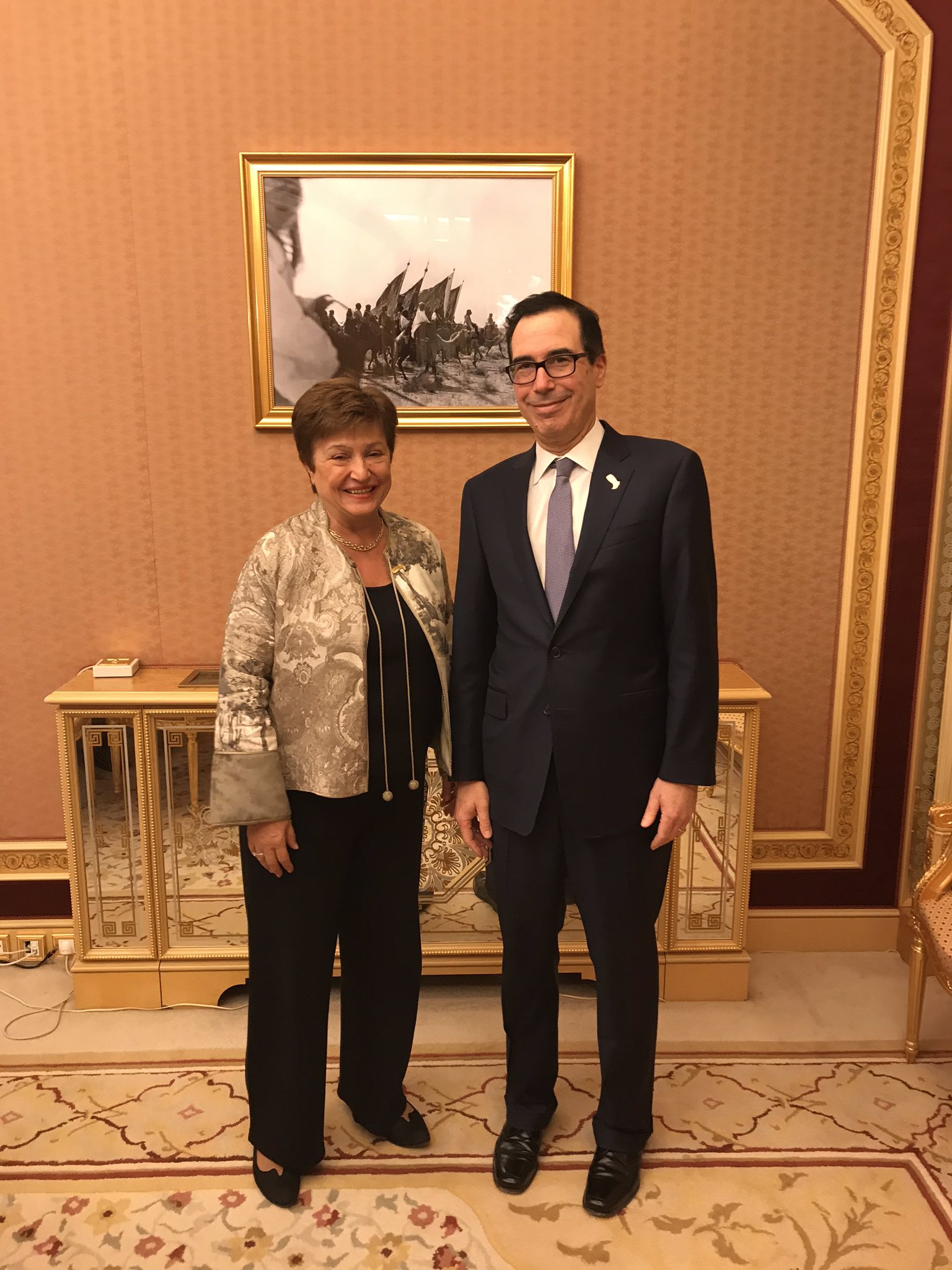
The head of the IMF does not give interviews to Egyptian newspapers by accident. Georgieva's Youm7 conversation — 70% of canal revenue gone, a Cairo visit within ten days — is choreography: the Fund signaling that Egypt's review will be a coronation, not an inquisition.
Start with the number that frames everything: seventy percent. That is how much Suez Canal revenue Egypt lost at the depth of the Red Sea shipping crisis, Georgieva told Youm7 — a fiscal crater in a country where the canal was, until 2023, a double-digit-billion-dollar annuity. August's 56.7% rebound to $567.1 million does not close the crater, but it proves the waterway's economics are healing faster than anyone modeled.
The macro picture has turned with it. The central bank's upgrade to 5% growth for 2025/26, reserves at $55.1 billion, a pound that has held its managed float — Egypt enters this review in its strongest position since the $57 billion IMF–Gulf–World Bank rescue package of 2024. Reviews are always easier when the numbers arrive before the mission does.
A managing director who talks up Egypt in the local press is telling everyone the same thing: the next tranche is a formality.
What the mission will actually examine is well known: exchange-rate flexibility (the pound's management remains the Fund's perennial anxiety), fuel and bread subsidy reform (the politically explosive kind), and the state's footprint in the economy — the military-linked enterprises the IMF has wanted privatized for years. Cairo has moved on all three, but on none of them completely. That incompleteness is the negotiation.
Georgieva's public warmth matters because IMF reviews are confidence games. A managing director who talks up Egypt in the local press is telling investors, Gulf depositors and the Egyptian street the same thing: the programme is on track, the money keeps flowing, the next tranche is a formality. Our morning reporting on carriers returning to Suez told the shipping side; this is the financial side of the same recovery.
The risk is the oldest one in IMF history: that a good review breeds complacency, and complacency breeds the next crisis. Egypt has been here before — praised in 2019, in distress by 2022. The canal's recovery buys time. What Cairo does with the time is the entire story.
Washington's lens is geopolitical accounting. Egypt is the Arab world's demographic anchor and the Suez Canal's landlord; a stable, IMF-certified Cairo is worth more to American strategy than the loan tranches themselves. The Western read: Georgieva's visit is alliance maintenance disguised as technocracy.
The markets' Western lens is narrower: will the review unlock the next disbursement on schedule, and will the pound's managed float survive it? Western funds holding Egyptian T-bills at double-digit yields are the real audience for the next ten days — and they read Youm7 interviews as forward guidance.
Beijing's lens is the creditor's. China holds Egyptian debt, builds Egyptian infrastructure and watches the IMF programme as a constraint on Cairo's freedom to maneuver — every Fund condition is a clause Beijing did not write. The Eastern read: a smooth review keeps Egypt creditworthy, which keeps Chinese projects payable. Everyone's interests align, for once.
The Gulf's lens — Eastern in geography, Western in finance — is the depositors'. Saudi, Emirati and Qatari deposits at the CBE underwrite the reserves figure Georgieva will praise. The review is their audit too: proof that the 2024 rescue bought reform, not just time.
Africa's lens is the template. Egypt's 2024 rescue — IMF plus Gulf plus World Bank, $57 billion — is the model every distressed African sovereign studies, and this review is its report card. A clean pass tells finance ministers from Accra to Lusaka that the formula works; a qualified pass tells them the conditions bite. The Southern read: Cairo is taking the exam the whole continent is watching.
The harder Southern reading is about the canal itself. Suez's 70% revenue collapse was an African wound inflicted by a non-African war — Houthi missiles, Red Sea insurance rates — and its recovery is hostage to the same. The South's lesson: the continent's most strategic asset is priced by other people's conflicts.
