Qatari mediators held separate talks with both sides on Monday; Iran's foreign minister expects Washington's answer by Tuesday night — while Middle East crude exports hit their highest level since the war began.
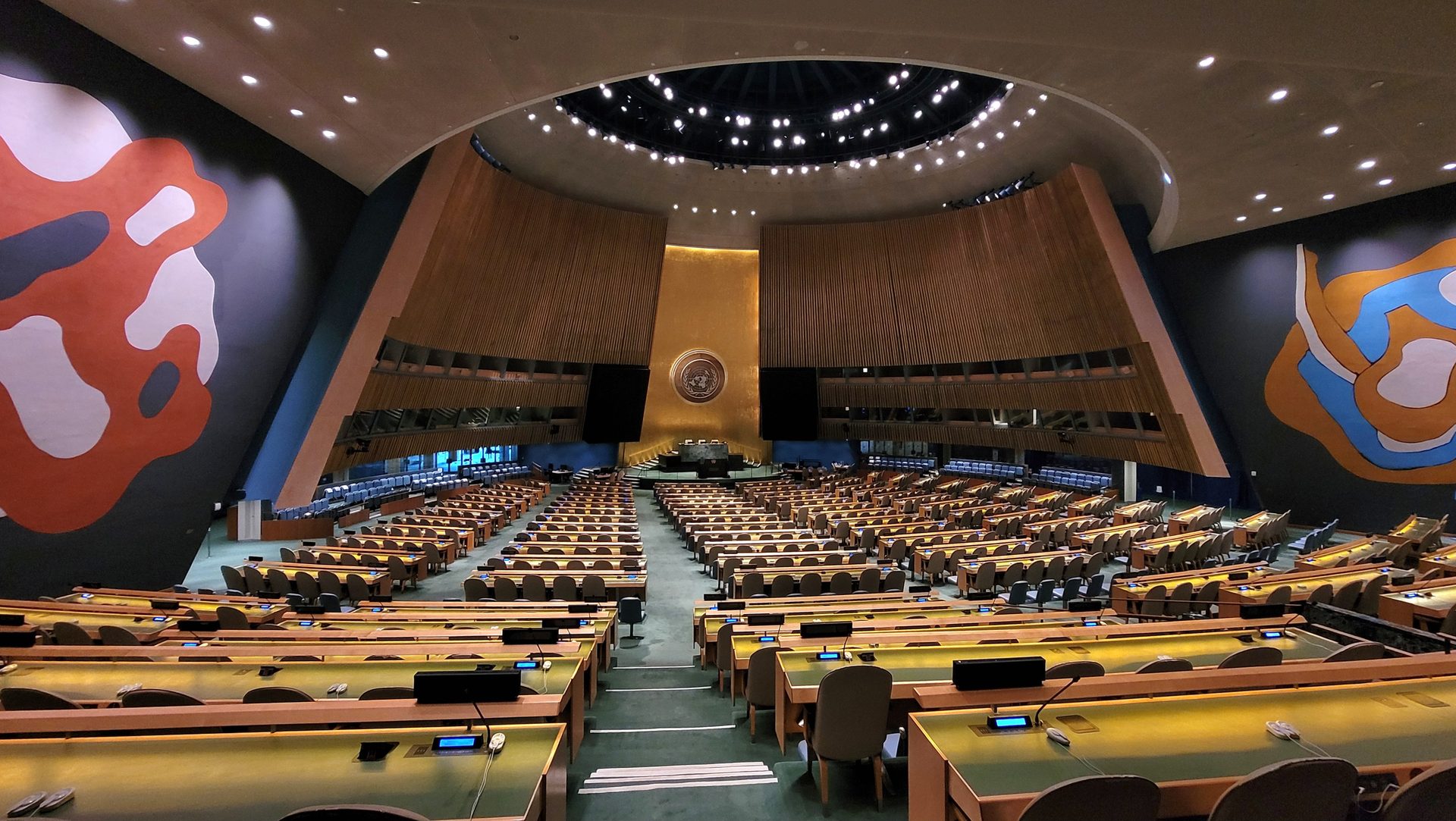
The war's seventh month may yet end with a phone call. On Monday, American and Iranian officials held separate talks with Qatari mediators in New York — indirect, room-by-room shuttle diplomacy of the kind that has ended every ceasefire this war ever produced. The subject was a revised version of Tehran's seven-day plan to reopen the Strait of Hormuz. By Tuesday, Foreign Minister Abbas Araghchi was on his way home, saying he expected Washington's answer by nightfall.
Tehran's terms have not moved: release frozen funds and lift sanctions on Iranian oil within four to five days, end the naval blockade of Iranian ports, and the strait reopens on day seven — with the nuclear file to follow within a week. Washington's ask has not moved either: Iran must show "concrete" progress on the nuclear programme — including inspectors — before any money flows. The same gulf that swallowed the April and June ceasefires is still there.
Two ceasefires this war has produced, both born in separate rooms with a mediator in the middle — and both dead within weeks. The shuttle is back; the record is not encouraging.
President Trump is running two tracks at once. On Sunday he told Axios he expects more talks this week; on Monday, at the White House, he confirmed American officials "spoke separately with the mediators" but offered no details — adding, with the confidence of a man addressing both the cameras and Tehran, that "we're going to win." The same day, he used Truth Social to deny Axios and CNN reports that he had offered Iran sanctions relief and frozen funds, calling the reports untrue and insisting he offered Tehran nothing.
Tehran answered with a smile and a slap. President Masoud Pezeshkian told CBS's Face the Nation that Iran is ready to discuss its nuclear programme and other issues — but will not accept "bullying or coercion." IRGC spokesman Hossein Mohammadi was blunter, calling Trump a "big liar" and saying the American campaign against Iran had failed. Araghchi's parting line in New York captured the Iranian posture precisely: "If the Americans claim they are seeking an agreement or a peaceful solution — we have provided this solution."
What neither side mentions, the tankers report. Kpler's physical supply data shows Middle Eastern crude exports rebounding this month to their highest since the war began in February — just under 80% of pre-conflict levels — as shippers adapt to a Hormuz that is strangled but not closed. Brent eased 0.76% to $104.48 on Tuesday as traders dared to price a sliver of diplomatic hope. The market, which stopped believing in a deal last week, is tentatively reopening the question.
Western coverage — Reuters, the AP, Axios, CNN, CBS — frames this as a credibility-and-conditions standoff inside a still-live channel. The reports agree on the mechanics: Qatari mediators shuttling between separate rooms, a revised seven-day draft, an answer expected Tuesday. Where they part ways is intent: the US outlets stress Washington's conditions — concrete nuclear steps, inspectors — while Trump's own words muddy the picture, confirming talks even as he denies any offer exists.
The Western lens also watches the bond market. With the 10-year near 5.3% and an October hike firmly in play, every hint of de-escalation moves Brent and the Fed calculus together — the war's inflation pulse is now the single variable Washington cannot hedge.
Eastern coverage — IRNA, ISNA, the IRGC's outlets, Xinhua's wire — reads the same week as Iranian patience under American pressure. Tehran put its plan on the table at the General Assembly, kept its foreign minister in New York waiting, and flew him home with a deadline — the picture of a side that has made its offer. Pezeshkian's "no bullying, no coercion" and Mohammadi's "big liar" are presented as a government holding its line in two registers: the president statesmanlike, the Guard defiant.
The Eastern lens notes what Washington's version omits: that it was American and Israeli strikes that opened this war in February, that Iran insists its nuclear programme is peaceful and sovereign, and that every prior breakdown — April, June — is described in Tehran as American bad faith, not Iranian.
The Global South lens — Al Jazeera, Arabic-language outlets like Ardh News and Almadarnet — reads the story through the mediator and the strait. Al Jazeera has become the chronicler of the Qatar channel: the shuttle, the separate rooms, the hoped-for Tuesday reply. For the Arabic press, the Hormuz reopening plan — a deal between Iran and Oman on traffic management, with no tolls — is the substantive core the two capitals keep burying under their rhetoric.
The South hears the economic heartbeat beneath the diplomacy. For the importers of Asia and Africa, a strait at 80% of normal is already the story — and whether Tuesday's answer brings it to 100% or back to zero is the only headline that matters.
