Key findings
- A single Dutch company, ASML, makes the extreme-ultraviolet machines that print the world’s most advanced chips — no one else can build them. ASML annual reports
- Taiwan’s TSMC manufactures roughly 90% of the world’s most advanced logic chips (below 7 nanometres). TrendForce, TSMC disclosures
- China refines about 90% of the battery-grade graphite that goes into electric-vehicle batteries. Benchmark Mineral Intelligence, USGS
- Since 2023, China has imposed export controls on gallium and germanium — two metals essential to chips and optics. China’s Commerce Ministry (MOFCOM)
- The 2021 chip shortage cost the global auto industry an estimated $210 billion in lost revenue. AlixPartners
Every phone, every server, every missile guidance system begins in the same two places.
A factory town in the Netherlands. And an island off the coast of China.
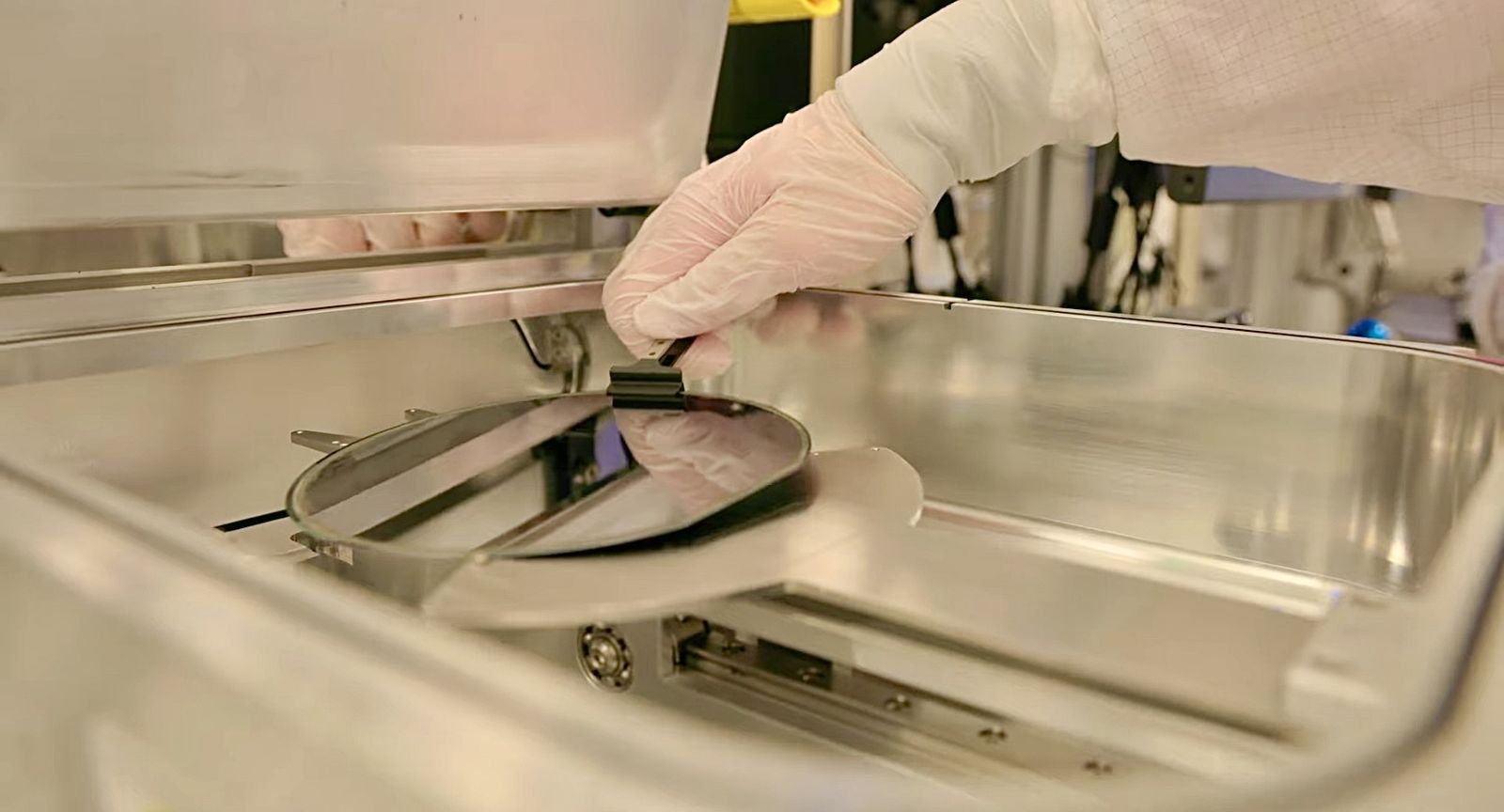
In Veldhoven, ASML builds the only machines on earth that can print the most advanced chips. Extreme ultraviolet lithography. One supplier. No substitute.
Each EUV tool costs on the order of two hundred million dollars. Each one contains hundreds of thousands of parts, mirrors polished by Zeiss in Germany to atomic smoothness, light sources born from tin droplets vaporized by lasers in San Diego.
It took three decades and a consortium of the entire Western tech industry to build this machine. Nobody else has one. That is not a market. That is a monopoly sanctioned by physics.
Then the machines go to Taiwan.
TSMC fabricates roughly nine out of every ten of the world's most advanced logic chips. Apple, Nvidia, AMD, Qualcomm — the entire AI boom runs through Hsinchu and Tainan.
Samsung is a distant second. Intel is still trying to become a foundry. China's SMIC has demonstrated 7nm-class output, but yields and scale remain contested — and contested is the honest word.
So the first chokepoint is lithography. The second is fabrication. And both sit within a few thousand kilometers of each other, under the shadow of the world's most dangerous strait.
Now the third chokepoint. It is not silicon at all.
Every lithium-ion battery needs an anode. The anode is graphite. And roughly 90% of battery-grade graphite — natural and synthetic — is refined in China.
The mine can be in Mozambique, Madagascar, or Brazil. The refining — the midstream — is Chinese. Same story as the chips: the hole in the ground is not the power. The furnace is.
In late 2023, Beijing imposed export controls on graphite. On gallium and germanium before that. The message was legible: chokepoints cut both ways.
Washington answered with its own tightening — ever-wider restrictions on ASML's deep-ultraviolet tools, on AI accelerators, on the engineers themselves.
The 2021 chip shortage gave a preview of what concentration costs. Carmakers lost an estimated $210 billion in revenue. Assembly lines from Wolfsburg to Detroit went silent for want of fifty-cent microcontrollers.
The policy response was the great reshoring wave: the US CHIPS Act, the EU Chips Act, Japan's Rapidus gamble, fabs rising in Arizona, Kumamoto, and Dresden.
But fabs take five years. Talent takes a generation. And none of the new fabs escape the first chokepoint — every advanced line on earth still needs ASML's machines.
See the structure?
The West controls the tools. Taiwan controls the printing. China controls the materials that go around the chips — graphite, gallium, germanium, rare earths.
Each side holds a different link of the same chain. That is not decoupling. That is mutual hostage-taking with extra steps.
Western lens
Western coverage — Bloomberg, the Financial Times, the Wall Street Journal, Reuters — reads the triad as a national security emergency.
The argument: concentration in Taiwan is an unacceptable single point of failure; export controls on ASML tools and AI chips are the price of keeping the lead.
The answer: reshore. Subsidize fabs at home. Deny the machines to Beijing and outrun it.
The risk is dependence. The cure is redundancy — inside allied networks, on allied timelines.
Eastern lens
Eastern coverage — Xinhua, the Global Times, the South China Morning Post, Nikkei Asia — reads the same facts as a containment story.
The argument: the controls prove the West fears competition it cannot win on merit; SMIC's progress and Huawei's return show the blockade leaks.
Chinese graphite and gallium controls are framed as symmetrical, lawful countermeasures — not escalation.
The risk is Western overreach. The cure is self-sufficiency: domestic lithography, domestic EDA, domestic everything.
Global South lens
The South — The Hindu, Al Jazeera, the Daily Maverick, Jakarta Post — reads the chip war as someone else's fight with Southern casualties.
The question here isn't who wins the 2nm race. It's who gets priced out of compute, and whose minerals feed the furnaces.
The DRC's cobalt, Indonesia's nickel, Mozambique's graphite: the South digs, the East refines, the West designs. The midstream, again, is where the value — and the veto — lives.
Every export control lands here as a price spike. Then as a delay. Then as a lecture about rules.
The consensus
- What we agree on
- All three blocs agree: the chain is dangerously concentrated. One lithography supplier, one dominant foundry, one dominant graphite refiner. Nobody disputes the map.
- What we don't agree on
- On whether the controls are security or coercion. Washington calls it de-risking; Beijing calls it a blockade; the South calls it a tax it never voted for.
- What we know
- ASML is the sole EUV source. TSMC holds ~90% of advanced logic. China refines ~90% of battery graphite and imposed graphite, gallium and germanium controls in 2023. The 2021 shortage cost automakers ~$210B.
- What we don't know yet
- SMIC's true yields and sustainable scale at 7nm. Whether Arizona, Kumamoto and Dresden fabs hit volume on schedule. How far graphite controls bite before alternative refining scales.
- What we expect
- Controls widening in both directions. Fabs as geopolitical assets. The materials chokepoint — graphite today, rare earths tomorrow — becoming the East's standard reply.
Sources
- ASML annual reports and lithography shipment disclosures West
- TSMC quarterly disclosures; TrendForce foundry rankings East
- Benchmark Mineral Intelligence graphite supply chain assessments West
- USGS Mineral Commodity Summaries 2026 — graphite, gallium, germanium, rare earths West
- MOFCOM export-control notices (gallium, germanium 2023; graphite 2023) East
- AlixPartners automotive semiconductor shortage estimates West
- Bloomberg / Financial Times / Reuters semiconductor coverage West
- Xinhua / Global Times / South China Morning Post technology coverage East
- Nikkei Asia chip-industry reporting East
- The Hindu / Al Jazeera / Daily Maverick critical-minerals coverage Global South
Premium investigation
This investigation continues for members
You have read the key findings and the full anatomy of the three chokepoints — the tools, the printing, the materials. The rest of the investigation — the part that makes it an investigation — is behind the lock.
- The full 3-lens analysis: Western, Eastern and Global South readings of the chip war
- The consensus ledger: what all three blocs agree on, and what they don't
- The complete source appendix with bloc-tagged sourcing
No card required today — Premium launches soon. Sign in with your existing account to reserve your access; the investigation unlocks the moment Premium goes live.