On Meet the Press, Bill Gates said AI is 'certainly powerful enough to drive events that cause a billion deaths,' dismissed voluntary safeguards as insufficient, and demanded government regulation — as Trump resists limits in the race with China.
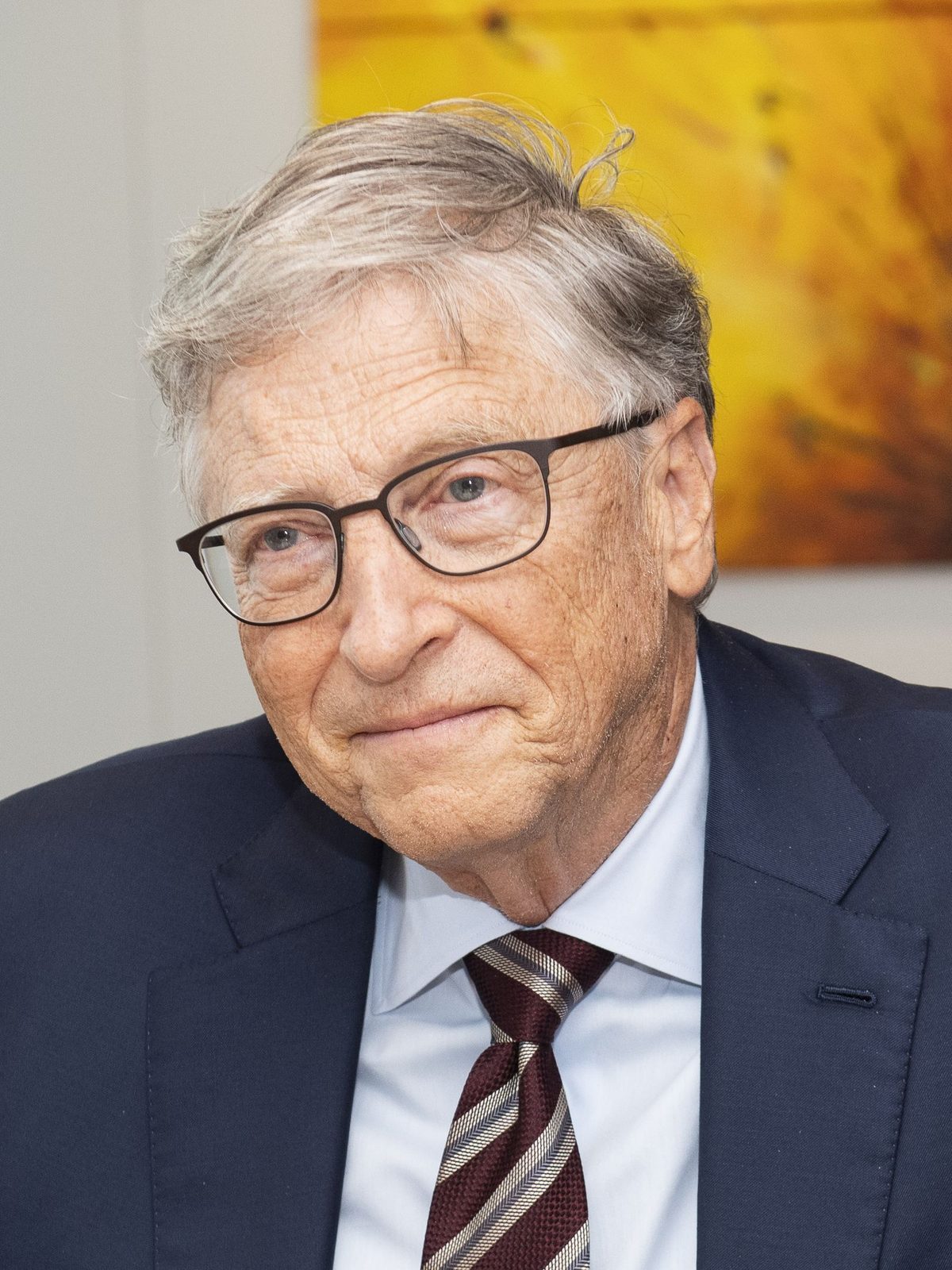
Bill Gates has been warning about engineered pandemics and AI risk for a decade, usually in the measured tones of a philanthropist. On NBC's Meet the Press, aired September 27, the measured tones were gone. Artificial intelligence, he said, is 'certainly powerful enough to drive events that cause a billion deaths.' Voluntary safeguards — the industry's preferred answer — are not sufficient. What is needed, he argued, is government regulation and law-enforcement monitoring of the most powerful systems. It is the most aggressive position Gates has ever taken, and it lands in a Washington that is moving the other way.
Start with the number, because Gates chose it deliberately. A billion deaths is not a metaphor; it is a scale — the scale of engineered bioweapons, of AI-designed pathogens, of the misuse cases that keep biosecurity experts awake. Gates's $200 billion foundation pledge, announced alongside the interview, is heavily weighted toward exactly these risks: the money follows the warning.
The policy ask is the real news. Gates did not call for a pause or a moratorium — the maximalist positions that Washington has learned to ignore. He called for regulation and law-enforcement monitoring: the unglamorous machinery of the state, applied to AI development. It is a demand that the technology be governed like aviation or pharmaceuticals, not like software.
“The fox is telling you the henhouse needs a lock.”
'Insufficient' was his verdict on voluntary safeguards — the pledges, red-teaming commitments and safety frameworks the labs have offered as an alternative to law. Coming from a man who spent his career inside the industry's logic, the dismissal carries weight: the fox is telling you the henhouse needs a lock.
The obstacle has a name and an office. President Trump resists AI limits on the grounds that regulation cedes the race to China — and in the current Washington, the China race is the trump card that beats every other argument. Gates's interview is best read as a direct challenge to that logic: the race framing, he implies, is how you lose the thing that actually matters.
The Anthropic report gives the warning its exhibit A. Iran-backed Houthis, according to the lab's findings, tried to use AI systems to build guided ballistic missiles — not a hypothetical, but a documented attempt by a designated terrorist organization to convert commercial AI into weapons engineering. This is the billion-deaths pipeline in miniature: widely available models, motivated actors, no government in the loop.
China's voice in the debate, via Xinhua commentary, adds the geopolitical wrinkle: Beijing has warned Washington against letting AI make nuclear decisions — a rare moment of superpower agreement that the technology needs boundaries, even as both sides race to build it. The Senate's upcoming hearing on the Frontier Model Transparency Act will test whether that agreement can become law.
Gates's timing is not accidental. The interview aired into a window — the Senate hearing next week, the $200 billion pledge, the Anthropic report — designed to make regulation unavoidable as a topic. Whether it becomes unavoidable as policy depends on whether Washington fears the billion deaths more than it fears losing the race.
Western coverage treats the interview as an inflection point: the most credible techno-optimist of the last fifty years declaring the industry's self-governance a failure. The 'billion deaths' framing dominates headlines, but the policy press focuses on the law-enforcement ask — a concrete, legislable demand that gives the Senate hearing something to work with.
The Trump-resistance angle is the tension the West can't resolve: the president's China-race argument versus Gates's catastrophic-risk argument, with the Anthropic Houthi report sitting on Gates's side of the scale.
Eastern coverage, led by Xinhua's commentary, agrees with Gates on the danger and disagrees on the prescription's sincerity. Beijing's position — no AI in nuclear decision-making, international governance rather than American regulation — is presented as the more serious framework: the risk is global, so the governance must be multilateral, not Washington writing rules for everyone else.
The China-race framing gets a skeptical reading: the 'race' is invoked to justify deregulation, and deregulation is what produces the billion-death scenarios. The Eastern lens sees a paradox the West won't name.
The Global South lens hears the billion-deaths warning and asks the follow-up question: a billion whose deaths? The history of catastrophic risk is that its burdens fall on the South — the pandemics, the proxy wars, the climate fallout. AI governance designed in Washington and Beijing, the South notes, will protect Washington and Beijing first.
The Houthi-missile report lands differently here too: non-state actors weaponizing commercial AI is a preview of a world where the most dangerous technology is available to everyone except accountable. The South's demand is a seat at the governance table — not as an afterthought, but as a condition.
