Mexico will buy more US goods and cut its reliance on Asian suppliers ahead of the USMCA review, Sheinbaum said — with a record $102.6 billion bilateral surplus and Trump's tariffs on the table in Washington.
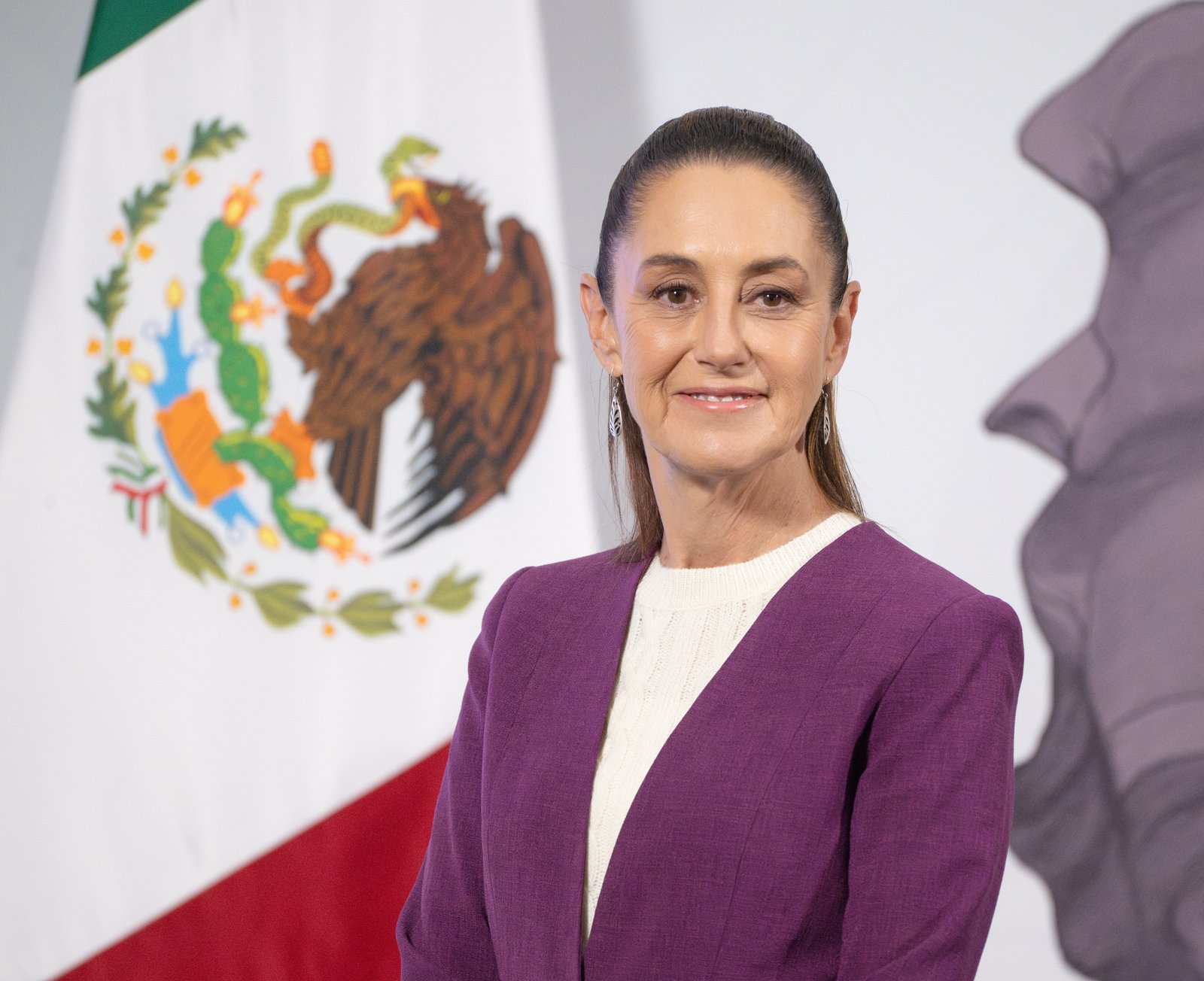
Mexico has decided how to survive the USMCA review: by buying its way out. President Claudia Sheinbaum announced on September 21 that Mexico will increase its purchases of American goods — particularly in sectors where it currently depends on Asian suppliers — and curb Chinese imports, in a bid to defuse Washington's tariff threats before the treaty's review turns into a renegotiation.
The logic is transactional, and deliberately so. Mexico bought more than $250 billion in American products last year, Sheinbaum noted — and the offer now is to buy more, on purpose, in the categories where Chinese and other Asian suppliers currently dominate. It is industrial policy as diplomacy: redirect the supply chain, and the tariff argument loses its target.
The stakes are written in the surplus. $102.6 billion in the first half of 2026 alone — a record, and precisely the figure that makes the agreement a political target in Washington. Every billion of that surplus is, in Trump's arithmetic, a billion America 'lost.' Sheinbaum's gambit is to convert the surplus from an accusation into a shopping list.
Convert the surplus from an accusation into a shopping list.
In Washington, the fourth round of negotiations is grinding through the hard numbers: 25% tariffs on Mexican steel and aluminum, 50% on autos. Mexico is seeking reductions; the American side is seeking concessions. The phone call between the two presidents — after which Trump said a tariff cut was 'on the table' and floated a meeting 'in a couple of weeks' — suggests the outline of a deal exists before the details do.
Beneath the surface, the China clause is the real story. 'Curb Chinese imports' is the sentence Washington wanted to hear, and Sheinbaum said it out loud. The USMCA review is, in practice, becoming a loyalty test — and Mexico has chosen its answer. The cost will be paid in Mexico City's relationship with Beijing, which has spent a decade building its Latin American position.
Meanwhile, on a second front, Mexico exempted ten Caribbean nations from 35% tariffs through 2028 — a reminder that Mexico City is playing trade diplomacy in more than one direction. The CARICOM move buys goodwill in a region where Chinese influence is also growing. It is a small gesture with a large subtext: Mexico intends to be the hemisphere's indispensable trader.
What happens next depends on whether buying American is enough. The review's logic is political as much as economic, and political logics are not satisfied by purchase orders alone. But Sheinbaum has understood the essential Trump-era rule: come to Washington with something to give, not something to defend. She is coming with a shopping list.
Western coverage — Reuters, the US trade press — reads Sheinbaum's move as the only viable play: with the review's politics set in Washington, Mexico's options were concession or confrontation, and concession was always going to win. The $102.6 billion surplus is presented as the gun on the table; the buy-American pledge as the holster.
The Western lens also notes the China dimension with approval. A Mexico that curbs Chinese imports is, in Washington's reading, a Mexico that chose the North American bloc — which is what the review was designed to test in the first place.
Eastern coverage — Xinhua and the Chinese press — reads the story as coercion dressed as choice. The argument: Mexico is being forced to sacrifice a beneficial trade relationship with China to appease a protectionist Washington, and the 'voluntary' import shift is anything but. The surplus, in this reading, is the hostage.
The Eastern lens warns of the precedent. If the USMCA review becomes a mechanism for forcing allies to decouple from China, every American trade agreement becomes a potential loyalty test — and every partner will price that risk into the next negotiation.
The Global South lens — Latin American outlets, Al Jazeera — reads the story as the region's eternal dilemma: how to trade with both giants without being crushed between them. Mexico's choice is presented not as strategy but as necessity — the luxury of neutrality belongs to countries without a $102.6 billion surplus to defend.
The South also notices the CARICOM exemption. While the great powers demand loyalty, Mexico is quietly building its own southern coalition — the move of a country that knows today's concession to Washington may need tomorrow's friends in the Caribbean.
