Rio Tinto and China's Baowu opened a $2 billion, 25-million-tonne iron ore mine at Paraburdoo this weekend. In a decade of decoupling talk, the ore that built modern China still ties the two countries together.
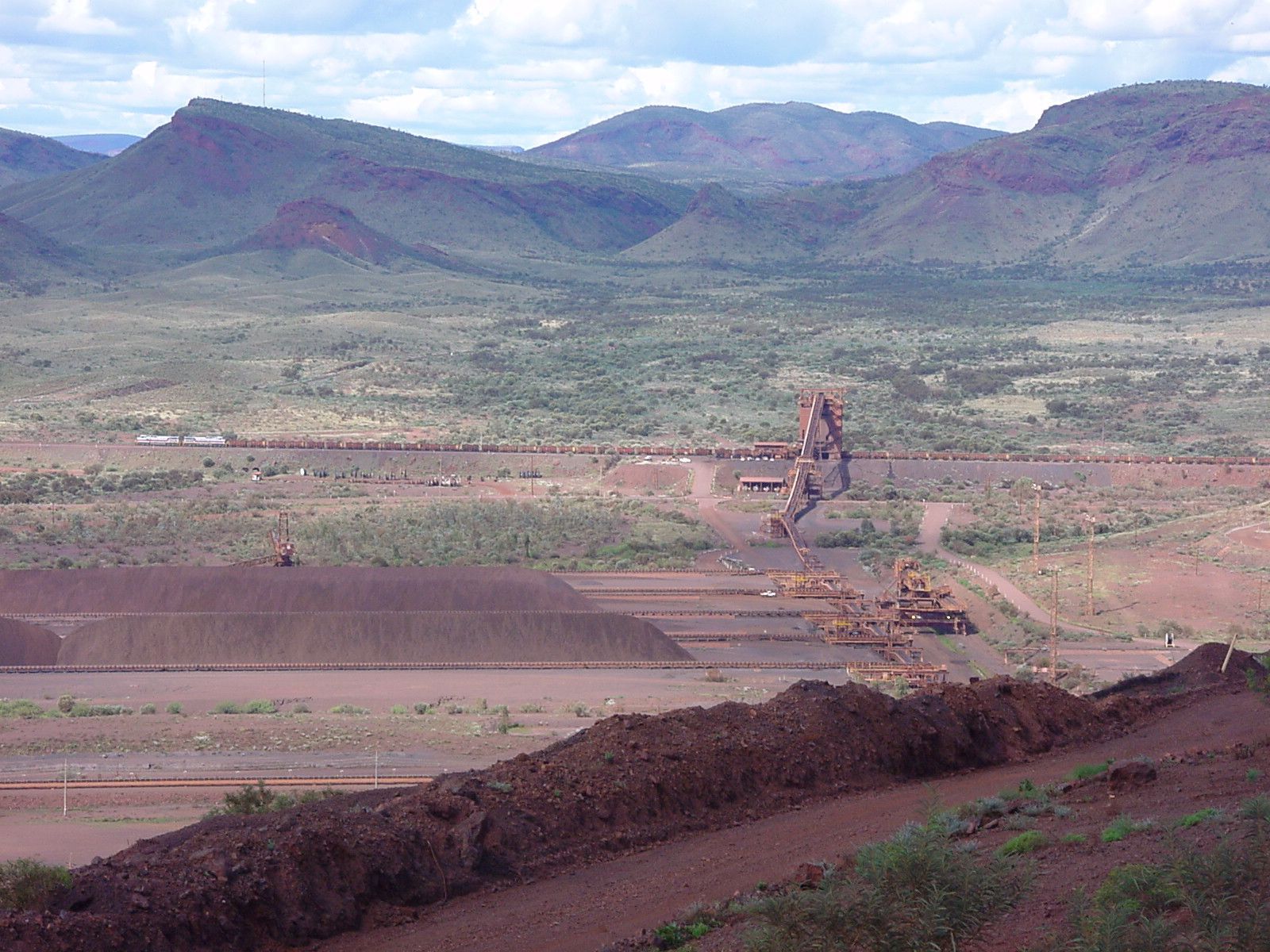
While politicians in Canberra and Beijing trade warnings about dependence, a joint venture 46% owned by a Chinese state steelmaker just opened a two-billion-dollar hole in the red dirt of Western Australia — and started filling ships bound for China.
The Paraburdoo mine that opened this weekend is modest by Pilbara standards — 25 million tonnes a year against a region that ships over 300 million — but its ownership is the story. Baowu, the world's largest steelmaker and an arm of the Chinese state, now holds equity inside the mine itself, not merely a buyer's contract at the port. It is the deepest form of resource interdependence: co-ownership of the ground.
Rio Tinto's numbers frame the decade ahead. More than US$13 billion of capital expenditure is planned for the Pilbara between 2025 and 2027 — new mines, rail, automation — to replace depleting pits and hold output flat into the 2030s. The Hamersley ranges beneath it all carry reserves that industry geologists value in the trillions; the 'US$6 trillion' figure circulating this week is speculative, but the direction is not: the ore will outlast every trade dispute.
Paraburdoo is decoupling's obituary written in joint-venture ink.
The timing is pointed. A decade of 'decoupling' rhetoric, foreign-investment screening and critical-minerals lists has barely dented the iron ore trade, because neither side can replace the other: China cannot build its steel without Pilbara ore, and Australia cannot sell its ore at scale to anyone else. Paraburdoo is decoupling's obituary written in joint-venture ink.
For Beijing, the Baowu stake is insurance — a hedge against price spikes and against the day Canberra's politics turn sharper. For Canberra, the Chinese capital is a signal to markets that the Pilbara remains open for business even as the security establishment frets. Both readings can be true at once; that is precisely why the deal survived every review.
Watch what follows the ore: the rail contracts, the automation vendors, the port expansions at Dampier. A mine is never just a mine in the Pilbara — it is a thirty-year mortgage on a relationship. This one was signed, in effect, by both governments.
Canberra's Western allies read the Baowu stake as the latest proof that Australia talks security and sells ore. Washington has spent years urging allies to de-risk from China; each new Pilbara joint venture makes that counsel look academic. The Western lens asks the uncomfortable question: what is an alliance worth when the bedrock commodity flows the other way?
The counter-read, made quietly in Canberra, is that co-ownership is leverage, not surrender. A Chinese state firm with billions sunk in Australian ground is a hostage to Australian regulation — licenses, royalties, environmental approvals. Ownership, in this telling, is the leash, not the collar.
From Beijing, Paraburdoo is resource security executed the Chinese way: not through conquest or coercion but through patient equity. Baowu's 46% buys something no futures contract can — a seat at the mine's table, visibility into costs, and a hedge against the day Australian politics turns. It is the Belt and Road's quieter cousin: ownership, not debt.
The Eastern lens also notes the symmetry. China spent a decade being told its investments were suspect; it kept investing, and the ore kept flowing. Paraburdoo suggests the lesson Beijing took from the decoupling years: interdependence is not a vulnerability to be managed but an asset to be deepened.
For the resource-rich developing world, the Paraburdoo template is the one to study: a producing country that kept majority control, extracted royalties and infrastructure, and let the customer buy in rather than buy out. Compare it with the debt-financed mine deals across Africa and Latin America, and Australia's bargain looks like the gold standard of resource sovereignty.
The harder Southern question is about price. When the world's largest steelmaker co-owns the mine, who sets the price — the market, or the shareholder? For every iron ore exporter from Brazil to South Africa, the Baowu stake is a reminder that the buyer is no longer just at the negotiating table. The buyer is in the pit.
